

PAD and PVD are related terms, but they do not always mean the same thing. PAD means peripheral artery disease, which affects arteries that carry blood to the legs and other parts of the body. PVD often means peripheral vascular disease, a broader term for blood-vessel problems outside the heart and brain. New leg pain, a foot wound that does not heal, or sudden changes in color or temperature need medical advice.
Medical Disclaimer: The information in this article is for educational and informational purposes only. It is not medical advice. New, severe, or changing leg symptoms should be discussed with a qualified healthcare professional.
If you have searched PAD vs PVD, you have probably found several answers that sound alike but are not the same. The terms are related. Still, the kind of blood vessel involved can affect the testing and care you need.
Knowing the terms can help you ask better questions. It cannot diagnose the reason for leg pain, swelling, numbness, or skin changes. At Texas IR & Interventional Oncology, patients can talk through symptoms and treatment options with an interventional-radiology team.
PAD vs PVD: The Quick Answer
PAD means peripheral artery disease. It usually refers to narrowed or blocked arteries outside the heart, most often in the legs. Arteries carry oxygen-rich blood away from the heart.
PVD often means peripheral vascular disease, a broad term that may include artery or vein disease.
A simple way to remember the difference is this: PAD is an artery problem. PVD can be a broader vascular term. PAD may fall under PVD, but not every condition called PVD is PAD.
What Is Peripheral Artery Disease (PAD)?
Peripheral artery disease happens when blood flow through an artery is narrowed or blocked. In the legs, the most common cause is atherosclerosis, which is a buildup of fatty plaque in artery walls [1].
When a leg artery is narrowed, the muscles may not get enough blood during activity. This is why some people have symptoms while walking or climbing stairs. PAD can also affect the feet and toes.
How PAD Can Feel in the Legs
A classic PAD pattern is aching, cramping, tiredness, or tightness in the calf, thigh, buttock, or foot during activity. The discomfort often improves after a short rest. This pattern is called claudication.
Not everyone has this pattern. The CDC notes that many people with PAD do not have typical leg pain [1]. Symptoms alone do not confirm PAD.
Other Changes a Clinician May Check
A clinician may also ask about a foot that feels cooler than the other side, unusual color changes, numbness, slow hair growth, or a sore that heals slowly.
A non-healing foot wound matters because poor circulation can make healing harder. It is especially important to seek care promptly if you also have diabetes or a history of smoking.
What Does PVD Mean?
“Peripheral” means away from the center of the body. “Vascular” means related to blood vessels. So PVD may describe circulation problems in vessels outside the heart and brain.
In many educational materials, PVD is an umbrella term that includes artery and vein conditions. Veins carry blood back toward the heart. Venous problems can include issues such as chronic venous insufficiency or varicose veins. These conditions have different causes and treatments from PAD.
Why Venous Problems Can Feel Different
Vein-related symptoms can include leg swelling, aching, heaviness, itching, visible veins, or discomfort that gets worse after standing for a long time. Those symptoms are not unique to vein disease. Heart, kidney, medicine, joint, and lymphatic problems can also cause swelling or leg discomfort.
The key question is: “What is causing my symptoms?”
PAD vs PVD Symptoms: A Simple Comparison
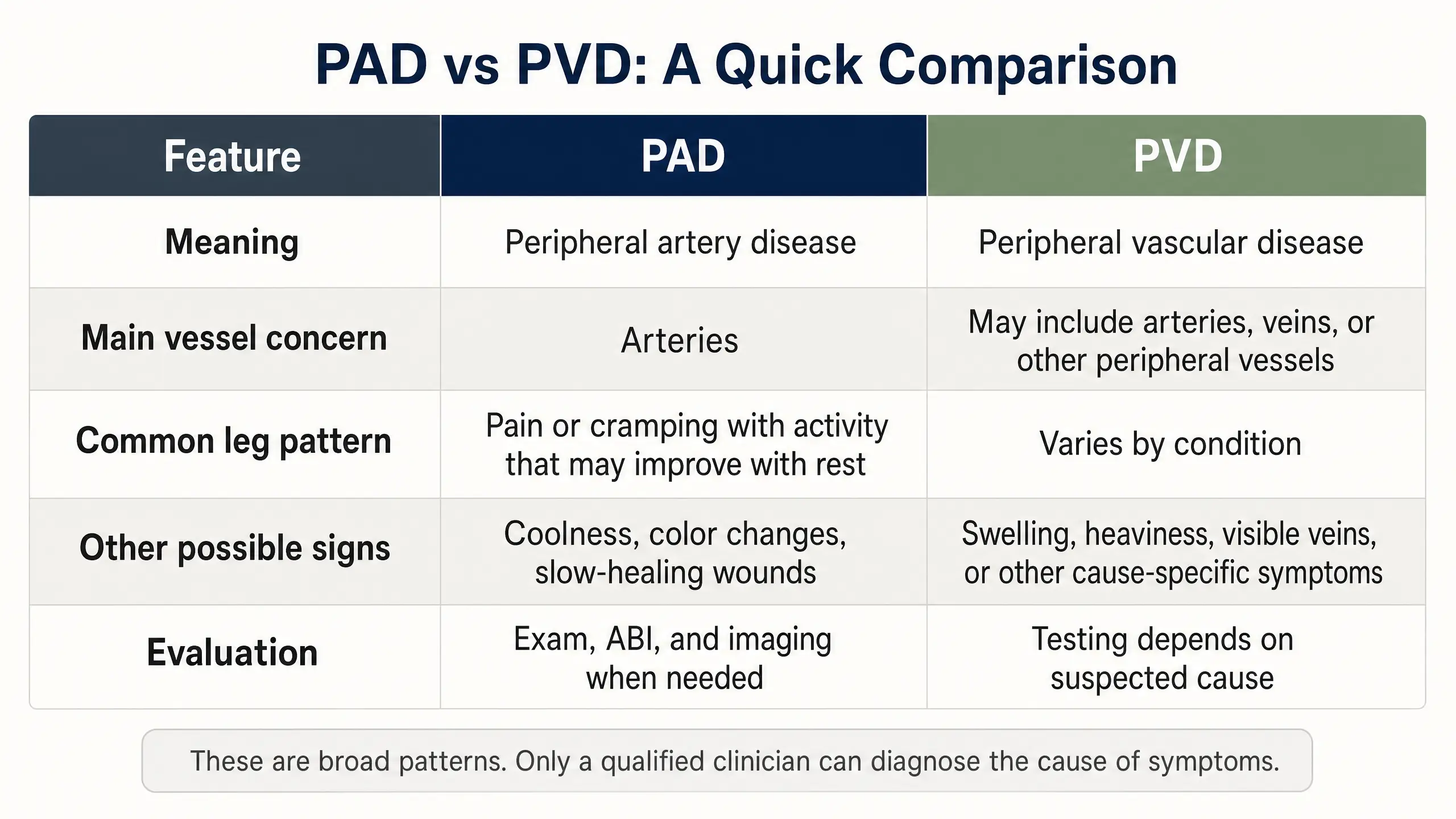
This table can help you understand broad patterns. It cannot tell you which condition you have.
| Feature | PAD | PVD as a Broader Term |
| Main vessel concern | Arteries | Arteries, veins, or other peripheral blood vessels, depending on how the term is used |
| Common leg pattern | Pain, cramping, or fatigue with activity that may improve with rest | Depends on the specific vascular condition |
| Other possible signs | Coolness, color changes, weak pulses, slow-healing wounds | Swelling, heaviness, visible veins, skin changes, or other symptoms based on the cause |
| Common test discussion | Examination, ankle-brachial index, and imaging when needed | Testing depends on whether an artery, vein, or another cause is suspected |
Why the Difference Between PAD and PVD Matters
The difference between PAD and PVD matters because treatment should match the cause. PAD care can include support for smoking cessation, blood pressure and cholesterol management, diabetes care, exercise guidance, medication, and procedures to improve blood flow when clinically needed [1].
Venous problems may need a different plan. A clinician might discuss compression, activity changes, ultrasound testing, medication review, or vein-focused care, depending on the diagnosis.
Your risk of PAD is higher with smoking, diabetes, high blood pressure, high cholesterol, and older age [1]. These risk factors do not prove that a person has PAD. They do make a careful assessment more important when symptoms appear.
How Clinicians Check for PAD or Other Vascular Problems
The first step is often a conversation about your symptoms, medical history, medicines, and daily activity. A clinician may ask when discomfort starts, whether it changes with rest, and whether you have noticed wounds or color changes.
Medical History and Examination
The examination may include checking pulses, skin temperature, sensation, color, and wounds. It can also include looking for swelling or visible vein changes. This helps narrow down the possible causes.
Ankle-Brachial Index (ABI)
An ankle-brachial index, or ABI, is a noninvasive test that compares blood pressure at the ankle with blood pressure in the arm. The CDC lists it as a common test used when PAD is suspected [1].
Ultrasound and Other Imaging When Needed
Ultrasound can help look at blood flow. Other imaging may be used when a clinician needs more detail to plan care. Not every person needs every test. The right test depends on symptoms and the concern found during an evaluation.
When to Seek Prompt Care for Leg Symptoms
Do not wait for a web search to solve new or worsening symptoms. Call a clinician promptly for a foot wound that is not healing, new pain at rest, worsening walking pain, or a noticeable color or temperature change in one foot or leg.
Seek emergency care right away for sudden severe leg pain, a cold or pale limb, sudden loss of feeling or movement, chest pain, trouble breathing, or symptoms that feel unsafe.
Get a Clear Answer About Arterial Symptoms in Houston and Katy
If leg symptoms are getting in the way of walking, sleep, or daily life, an evaluation can help identify the cause. Texas IR offers peripheral artery disease evaluation and treatment options for people who may need arterial assessment.
At vascular care at Texas IR’s Katy location, Dr. Poyan Rafiei, MD, can review symptoms, health history, and appropriate imaging. You can also find practice details through Texas IR on Google. An arterial procedure is considered only after the evaluation shows it may help.
Frequently Asked Questions (FAQs)
- Is PAD and PVD the same thing? – They are related, but they are not always the same. PAD specifically affects arteries, while PVD is often a broader term for peripheral blood-vessel conditions. The exact meaning of PVD can vary by source.
- What are the first signs of PAD in the legs? – Some people notice leg cramping, fatigue, or pain during walking that improves with rest. Others have no typical symptoms, so risk factors and a clinical exam matter too.
- Can PVD cause leg swelling? – Some venous conditions that may be grouped under PVD can cause swelling. Swelling has many possible causes, so new, one-sided, sudden, or worsening swelling should be checked by a healthcare professional.
- How is PAD diagnosed? – Diagnosis may include a health history, physical examination, ankle-brachial index, and imaging when needed. The testing plan depends on your symptoms and medical history.
Conclusion
PAD and PVD are useful terms, but choosing the right acronym is less important than finding the reason for your symptoms. If you have new leg pain, a changing foot wound, or concerns about circulation, get a professional assessment instead of trying to diagnose the problem yourself.
To discuss ongoing leg symptoms, contact Texas IR about leg symptoms.
───────────────────────────────────────────────────────────────────────────
Medical Disclaimer: The information in this article is for educational and informational purposes only. It is not medical advice. New, severe, or changing leg symptoms should be discussed with a qualified healthcare professional.
───────────────────────────────────────────────────────────────────────────
References
[1] Centers for Disease Control and Prevention. About Peripheral Arterial Disease (PAD). https://www.cdc.gov/heart-disease/about/peripheral-arterial-disease.html
[2] Cleveland Clinic. Peripheral Artery Disease (PAD). https://my.clevelandclinic.org/health/diseases/17357-peripheral-artery-disease-pad